On a Sunday morning at the edge of provincial towns across Britain people gather in car parks to sell stuff. Posher people might go to an antiques auction but the plebs park their car, lay out their rubbish on a picnic table and prepare to haggle (haggle= argue about the price). When I was a kid they didn’t exist. Instead there were periodic jumble sales in church halls. However, jumble sales were organized to support a good cause. All the money went into one pot and the sellers were volunteers. Car boot sales are for profit.
The Dream of the Seller
People accumulate huge quantities of possessions in their lives. When something is no longer wanted or needed it goes in the attic (=trastero), basement (=sótano) or garage. Over time all these places fill up with stuff. We have collections of unwanted presents, souvenirs from holidays, gadgets that never quite performed the task we imagined, tools for hobbies we promised ourselves we would keep up with but didn’t, furniture, pictures and junk. If we are honest, it is all junk. Our dream is that we can part with it for money, instead of taking it all to the dump (=punto limpio).
In Spain you put an ad on Milanuncios or Wallapop. In the UK you find a picnic table, load it into the back of your car and drive to a car park on the edge of town. You set your possessions out and wait for the multitudes. It is one part of the charm of a car boot sale that everyone thinks they are getting a good deal. You have to be prepared to haggle.
The Dream of the Buyer
There are dozens of programmes on British television where people are given some money and sent off to find a bargain. Buyers want to find an overlooked treasure. If you know what you want, you go to a shop. The dream of the buyer at a car boot sale is that he will happen across something exciting. It might be a broken tool that only you know how to repair, an old lamp that will look good in the spare room, or an antique that the owner does not realize is valuable.
Some buyers have a dream that they will find something so valuable that they can clean it up, take it to the local auction house and make a nifty profit. With the advent of the internet, they may have an account on ebay where they sell things on. They also like the feeling that they have negotiated a bargain with the seller. It is quite ridiculous. The junk on offer is not valuable and the prices are low. However, people who go to these sales enjoy the game.
But It’s Junk, Isn’t It?
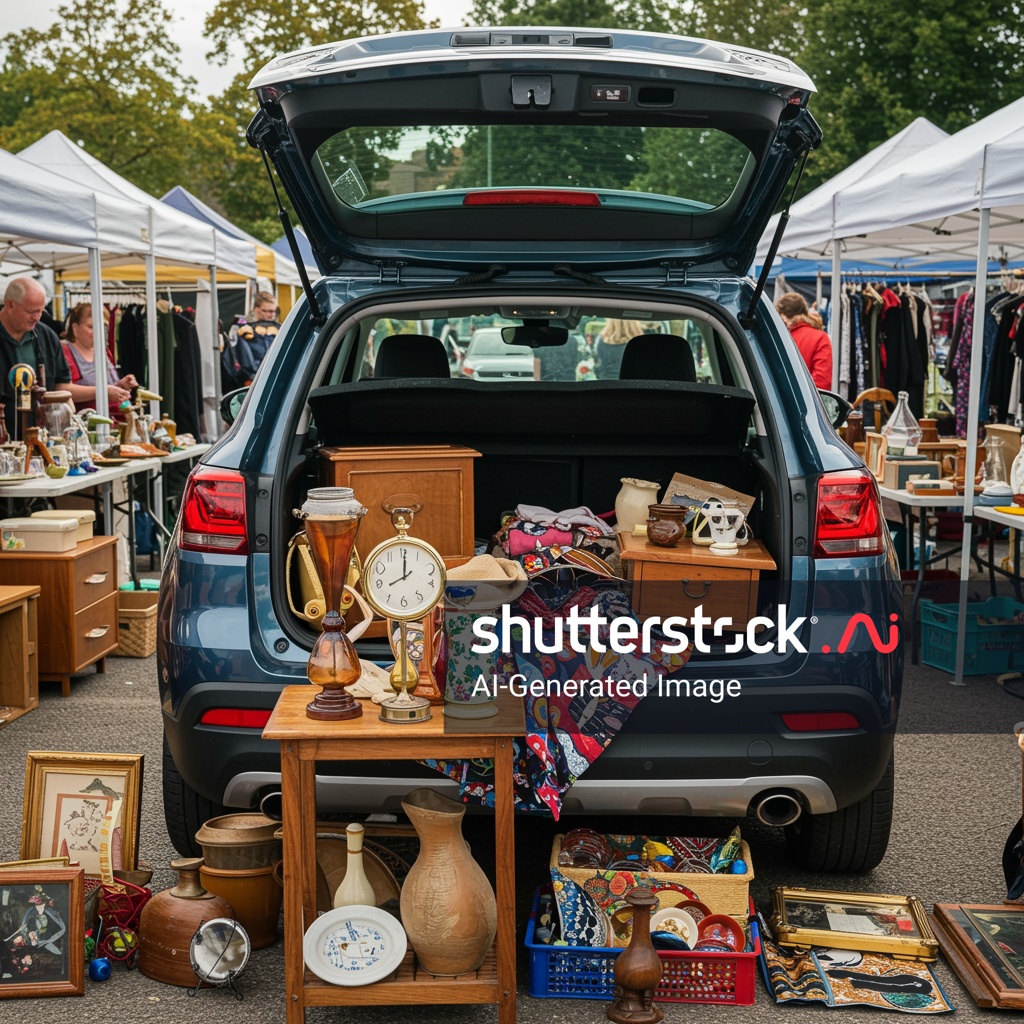
You would be unlikely to sell a lot of the junk that is on display at a car boot sale on the internet. It is not valuable enough. However, there is another side to car boot sales that explains their continuing popularity. Going to these events is a leisure activity. People enjoy looking through other people’s stuff. One part of the pleasure of a car boot sale is seeing the horrendous bad taste that people have in art and decorations. The picture here gives the misleading impression that you might find a something more interesting than a souvenir donkey with a raffia basket and plastic lemons.
It’s not just morbid curiosity, however. People like the conversations they have with the sellers. Maybe it offers a vision of what life used to be like when you bought things in local shops and markets. Now when you go to the supermarket you can use the self-service checkout and don’t need to talk to anyone. The sellers and the buyers are all people of a certain age. They can chat for five minutes about the weather and not die of boredom. It doesn’t really matter if they come away with anything because they were not specifically looking for anything anyway.
Not For Everyone
I’m not cut out for this kind of thing. I’ve only been to one car boot sale as a seller and I will never repeat the experience.
«I’ll give you 20p,» the weedy man said. He had been looking at the books I had been hoping to sell. There was a small sticker on each book with the price.
«Hmm, they all have a price on them,» I said innocently.
«And you won’t take less?» he asked in disbelief.
«No,» I answered and watched him walk away disappointed.
«That’s not the way to do it,» said my sister-in-law, Sue. «You should have put a high price on to start with so that you could give him a bargain.»
I didn’t get it. I had put a low value on my things because I wanted to get rid of them, but I wasn’t going to give them away. Bartering and haggling annoyed me. I wasn’t cut out for it. In the end I took the whole lot to the dump and was happier throwing them away than selling them.
How about you? Would you do a car boot sale?
Language Points
- Barter: trueque
- Haggle: regatear
- Stuff: cosas (inf)
- Junk: trastos, chatarra
- Dump: vertedero, punto limpio
- get rid of: deshacerse de
- cut out for: estar hecho o servir para
- give away: donar
- throw away: tirar
- come away with: quedarse con
- look through: investigar; echar un vistazo; descubrir